


Textile vs. Chemical vs. Pharma ETP: How Biological Cultures Perform Differently
There is a particular kind of stress that EHS Managers know intimately. It arrives unannounced, sometimes on a Monday morning when the shift report shows a spike in COD discharge values, sometimes when an SPCB inspection notice lands on your desk with forty-eight hours’ notice. You have checked the equipment. The aerators are running. The settling tanks look normal to the eye. And yet something in your ETP is quietly failing, and you may not even know where to look.
The answer, more often than not, lives in the biology.
Every industrial effluent treatment plant runs on an invisible workforce: billions of microorganisms, bacteria, archaea, fungi, and protozoa, that consume, transform, and neutralize the toxic load your process generates. These organisms are not passive. They respond to temperature shifts, toxic shock, pH swings, and organic loading fluctuations with the sensitivity of a living ecosystem, because that is precisely what they are. When they are healthy and diverse, your ETP performs. When they are stressed, depleted, or mismatched to your specific effluent chemistry, your compliance numbers begin to drift.
What most plant operators do not realize is that the biological cultures optimized for treating textile dyeing effluent are fundamentally different from those that thrive in a pharmaceutical ETP, and both are different again from what works inside a chemical manufacturing treatment plant. Treating these as interchangeable is one of the most common and costly mistakes in Indian industrial effluent treatment.
This blog post is written for EHS Managers, Plant Heads, and Operations Engineers across pharma, textiles, chemicals, dairy, food processing, paper, and tannery sectors who need a clearer map of what is happening inside their biological systems, and what to do when it stops working.
Indian ETP Compliance Pressure

India’s Central Pollution Control Board (CPCB) and the respective State Pollution Control Boards (SPCBs) have progressively tightened discharge norms under the Environment Protection Act and sector-specific effluent standards. Parameters like BOD, COD, Total Dissolved Solids (TDS), suspended solids, color, and specific toxic compounds are monitored with increasing frequency, and penalties for non-compliance have grown sharper.
Indian manufacturing hubs face a unique combination of challenges that global benchmarks do not fully account for:
- Extreme seasonal temperature variation: Summer months in Gujarat, Rajasthan, and Maharashtra can push ambient temperatures above 42°C, accelerating microbial metabolism but also stressing sensitive cultures. Winter in Punjab and Himachal facilities can suppress biological activity dramatically.
- Erratic power supply: Load shedding in Tier 2 and Tier 3 industrial areas causes aeration interruptions that can collapse aerobic biomass within hours.
- Variable raw material sourcing: Production shifts mean influent chemistry changes batch to batch, making biological acclimatization a constant challenge.
- Water scarcity and ZLD mandates: Many industrial clusters are now under Zero Liquid Discharge directives, placing enormous pressure on biological systems to perform at the front end of the treatment train.
Against this backdrop, understanding how your specific biological culture is behaving, and whether it is the right culture for your effluent, is not an academic exercise. It is an operational necessity.
Sector Breakdown: The Three Most Challenging Effluent Profiles
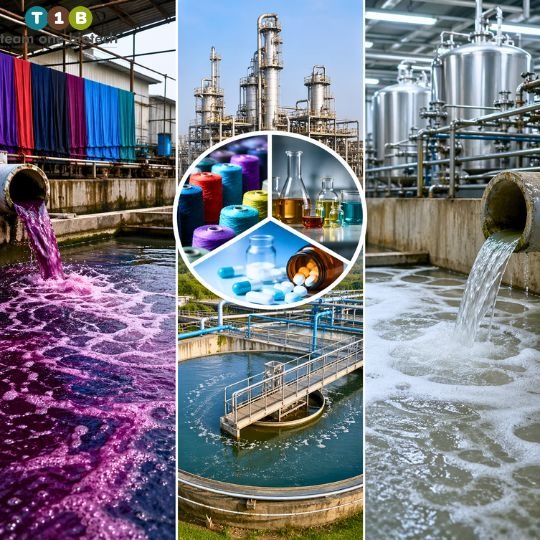
Textile ETP: The Problem of Refractory Dyes and High Color Load
Textile dyeing and processing units generate some of the most visually alarming and biologically challenging effluent in Indian industry. The Tirupur cluster in Tamil Nadu, the Surat textile belt, and the Bhilwara region in Rajasthan together represent massive discharge volumes that have defined the evolution of effluent treatment challenges in India.
What makes textile effluent uniquely difficult for biological cultures?
The core challenge is the presence of synthetic dyes, particularly azo dyes, reactive dyes, vat dyes, and disperse dyes, which are specifically engineered to resist degradation. That chemical stability is what makes them effective as colorants. It is also what makes them refractory, meaning resistant to conventional biological breakdown.
Standard activated sludge systems, populated with generic heterotrophic bacteria, will achieve reasonable BOD reduction in textile effluent but fail significantly on color removal and on degrading the aromatic amine compounds that azo dye cleavage produces. These intermediates are not just aesthetically problematic, several are classified as potentially mutagenic and are specifically flagged in CPCB discharge standards.
How specialized biological cultures approach textile effluent:
- Sequential anaerobic-aerobic treatment is the established framework. Under anaerobic conditions, the azo bond in dye molecules can be reductively cleaved by specific anaerobic bacteria, breaking the chromophore. The aromatic amines released are then further oxidized under aerobic conditions.
- Specialized facultative anaerobes and white-rot fungal cultures (where integrated) have demonstrated capacity to decolorize a broader spectrum of textile dyes.
- Biomass health in textile ETPs is typically maintained at Mixed Liquor Suspended Solids (MLSS) levels in a range broadly between 2,500–4,000 mg/L in the aerobic zone, though optimal ranges depend on the specific SBR, MBBR, or conventional ASP design in use.
These are general values provided for guidance; actual parameters vary based on specific ETP design, influent characteristics, and local operational conditions.
Key operational stressors in textile ETPs include salt loading from reactive dye processes (which can osmotically stress microbial cells), pH fluctuations from alkali scouring steps, and temperature spikes from hot dyebath discharges.
If your textile ETP is consistently meeting BOD discharge norms but failing on color or showing rising COD trends, this is a strong signal that your biological culture profile needs reassessment. Team One Biotech’s microbial audit service can identify exactly which functional guilds are underrepresented in your biomass and recommend targeted bio-augmentation.
Chemical ETP: High COD, TDS, and the Inhibitory Cocktail
Chemical manufacturing, including dye intermediates, agrochemicals, specialty chemicals, and petrochemical derivatives, generates effluent that is simultaneously high in organic load, chemically diverse, and frequently toxic to the very microorganisms needed to treat it.
Plants across the Ankleshwar-Panoli cluster in Gujarat, the Navi Mumbai chemical belt, and the Hyderabad pharma-chemical corridor deal with effluent where a single batch change upstream can alter the COD profile by several thousand mg/L.
The defining characteristics of chemical ETP effluent:
- Very high COD values, often driven by organic solvents, reaction byproducts, and unconverted raw materials
- Elevated TDS from inorganic salts used in synthesis and process water
- Presence of specific inhibitory compounds, surfactants, heavy metals (in some processes), halogenated organics, that can suppress microbial enzyme activity
- Inconsistent BOD:COD ratio, which is a critical indicator of biodegradability; in chemical effluent this ratio is frequently low, indicating that a large fraction of the organic load is not readily bioavailable
Biological culture behavior in chemical ETPs:
Generic sludge inoculants, even when seeded from well-functioning municipal or food-processing ETPs, typically fail to establish stable performance in chemical effluent environments. The selective pressure of the toxic compounds eliminates sensitive organisms rapidly, leaving a depleted, functionally narrow community.
Specialized chemical-industry cultures, developed and adapted under controlled enrichment conditions, incorporate robust degraders of specific compound classes, aromatic hydrocarbons, halogenated solvents, nitrogenous organics, alongside organisms with elevated tolerance to osmotic stress and pH variability.
- Anaerobic treatment stages in chemical ETPs typically target COD removal efficiency broadly in the range of 60–80% as a pre-treatment step, before aerobic polishing.
- Dissolved Oxygen (DO) management in the aerobic stage is particularly critical, levels maintained broadly between 1.5–3.5 mg/L are commonly targeted in high-COD aerobic systems, though this varies by system design and organic loading.
These are general values provided for guidance; actual parameters vary based on specific ETP design, influent characteristics, and local operational conditions.
Shock loading, when a process upset sends an unusually high-strength batch to the ETP, is the single biggest threat to biological stability in chemical ETPs. Systems augmented with adapted cultures recover significantly faster from shock events than those relying on acclimatized generic sludge alone.
Pharmaceutical ETP: When Your Effluent Fights Back
Of the three sectors discussed here, pharmaceutical ETP management presents the most technically demanding biological challenge, and it is the one where the gap between compliance expectation and operational reality is most often felt.
The effluent from Active Pharmaceutical Ingredient (API) manufacturing, bulk drug synthesis, and formulation plants contains compounds that are, by design, biologically active, molecules engineered to interfere with cellular processes. When these reach an ETP, they do not conveniently deactivate. They inhibit microbial metabolism, disrupt nitrification, and in high concentrations can cause acute toxicity to the biological community.
What pharma ETP operators deal with daily:
- Antibiotic residues that suppress or eliminate sensitive bacterial populations in the biomass
- Solvent loads from extraction and purification steps, methanol, acetone, dichloromethane, ethyl acetate, each presenting different biodegradation kinetics
- Fermentation broth residues from antibiotic and enzyme manufacturing, which are high in BOD but accompanied by inhibitory secondary metabolites
- High nitrogen loads in fermentation-based processes requiring specific nitrification-denitrification biological stages
The role of specialized pharma-adapted cultures:
Conventional ETP biology often suffers from what engineers call “wash-out” in pharmaceutical systems, the inhibitory load selectively kills off the most sensitive functional groups, including the nitrifying bacteria responsible for ammonia removal, which are among the most inhibition-susceptible organisms in an ETP.
Pharma-adapted biological cultures are enriched specifically from environments where pharmaceutical compound exposure has driven natural selection toward tolerant strains. These cultures:
- Maintain functional nitrification activity at antibiotic concentrations that would collapse standard nitrifier populations
- Include organisms capable of co-metabolic degradation of specific API molecules
- Are designed for staged introduction to allow gradual acclimatization rather than shock inoculation
MLSS targets in pharmaceutical aerobic systems are broadly maintained in ranges between 3,000–5,000 mg/L in high-load applications, with careful sludge retention time (SRT) management to protect slow-growing nitrifiers.
These are general values provided for guidance; actual parameters vary based on specific ETP design, influent characteristics, and local operational conditions.
For pharma plant operators managing CETP connections or independent ETPs, a biological culture audit before monsoon season, when dilution effects on influent change the loading profile, is a proactive step that consistently pays returns in compliance stability. Reach out to Team One Biotech to schedule a pre-monsoon microbial health assessment for your ETP.
The Biological Edge: Specialized Cultures vs. Generic Sludge

The industrial effluent treatment sector in India has historically under-invested in biological intelligence. The equipment, aerators, clarifiers, filter presses, receives maintenance attention and capital budget. The biology is often treated as a self-sustaining background process that only gets attention when visible failure occurs.
This is the fundamental gap that bio-augmentation addresses.
What specialized cultures offer over generic activated sludge:
- Functional diversity: Specialized consortia contain organisms selected for specific degradation tasks, color removal, COD reduction of refractory compounds, nitrification under inhibitory stress, rather than generic heterotrophic BOD removal
- Shock resilience: Adapted cultures carry genetic machinery for stress response, including efflux pump systems and enzyme induction pathways that allow survival and recovery under transient toxic loading
- Faster establishment: Seeding with specialized cultures reduces the biological start-up period from weeks to days in new ETPs or after catastrophic sludge loss events
- Reduced sludge generation: Specialized degraders operating efficiently often produce lower excess sludge per unit COD removed, reducing disposal cost, a significant operational saving for large plants
Waste Characteristics Across the Three Sectors
| Parameter | Textile ETP | Chemical ETP | Pharmaceutical ETP |
| Primary Pollutants | Synthetic dyes, auxiliaries, salt | Solvents, organics, TDS | API residues, solvents, fermentation byproducts |
| Key Biological Challenge | Refractory color, azo compounds | Inhibitory organics, shock loading | Antibiotic inhibition, nitrification suppression |
| COD Profile | Moderate to high, variable | High to very high | High, variable with batch production |
| BOD:COD Ratio | Moderate | Low to very low | Low to moderate |
| Best Biological Approach | Anaerobic-aerobic sequential | Adapted aerobic + anaerobic pre-treatment | Pharma-adapted cultures, staged SRT management |
| Critical Indian Compliance Concern | Color, BOD, TDS | COD, TDS, specific organics | COD, Ammonia-N, ecotoxicity |
| Seasonal Vulnerability | High (temperature, dilution) | High (shock loading variation) | Very High (nitrifier sensitivity) |
Values and characterizations are indicative based on sector-wide trends. Individual plant profiles vary significantly.
A Roadmap to Compliance Peace of Mind

Compliance peace of mind is not a product of better monitoring alone. Dashboards and sensors tell you what is happening; they do not fix the underlying biology that determines whether your ETP meets its discharge standards on a consistent, day-after-day basis.
The path forward for Indian EHS Managers and Plant Operators is clear:
- Audit your biology, not just your equipment. A microbial community analysis tells you which functional groups are present, which are depleted, and what your biomass is actually capable of treating.
- Match your culture to your effluent chemistry. Generic sludge is not a one-size-fits-all solution across textile, chemical, and pharmaceutical applications. The specificity of the biological challenge demands specificity in the biological solution.
- Build resilience before a crisis. Bio-augmentation as a proactive measure, particularly before seasonal loading changes or production ramp-ups, is dramatically less costly than emergency intervention after a compliance breach.
- Partner with specialists who understand Indian operational realities. Temperature variability, CPCB/SPCB specific norms, ZLD requirements, and the economics of Indian industrial operations require localized expertise, not generic global benchmarks.
Team One Biotech works with industrial facilities across pharma, textiles, chemicals, dairy, food processing, tannery, sugar, and paper sectors to deliver customized microbial consortia, bio-augmentation programs, and ongoing biological performance support. Whether you are commissioning a new ETP, recovering from a biological crash, or simply trying to move from reactive compliance to proactive stability, our team of environmental engineers and microbiologists is equipped to assess your specific situation.
Contact Team One Biotech today to schedule a customized microbial audit for your ETP. Because the most important part of your treatment plant is the part you cannot see, and understanding it is the first step to compliance you can count on.
Disclaimer: All numerical ranges provided in this article are general guidance values intended for educational purposes. Actual operational parameters depend on specific ETP design, influent characteristics, hydraulic and organic loading rates, local climatic conditions, and regulatory requirements. Consult a qualified environmental engineer before making changes to your ETP operations.
Looking to improve your ETP/STP efficiency with the right bioculture?
Talk to our experts at Team One Biotech for customised microbial solutions.
Contact: +91 8855050575
Email: sales@teamonebiotech.com
Visit: www.teamonebiotech.com
Discover More on YouTube – Watch our latest insights & innovations!-
Connect with Us on LinkedIn – Stay updated with expert content & trends!